Bricsys is a global provider of the BricsCAD® brand of engineering design software. We are relentlessly committed to the success of our customers. Bricsys has been advancing BricsCAD since 2002. Over the past two decades, our sole focus has been building cost-effective, mission-critical CAD tools. Now as part of global technology giant Hexagon AB, we are strengthening our commitment to taking your design workflow to the next level.
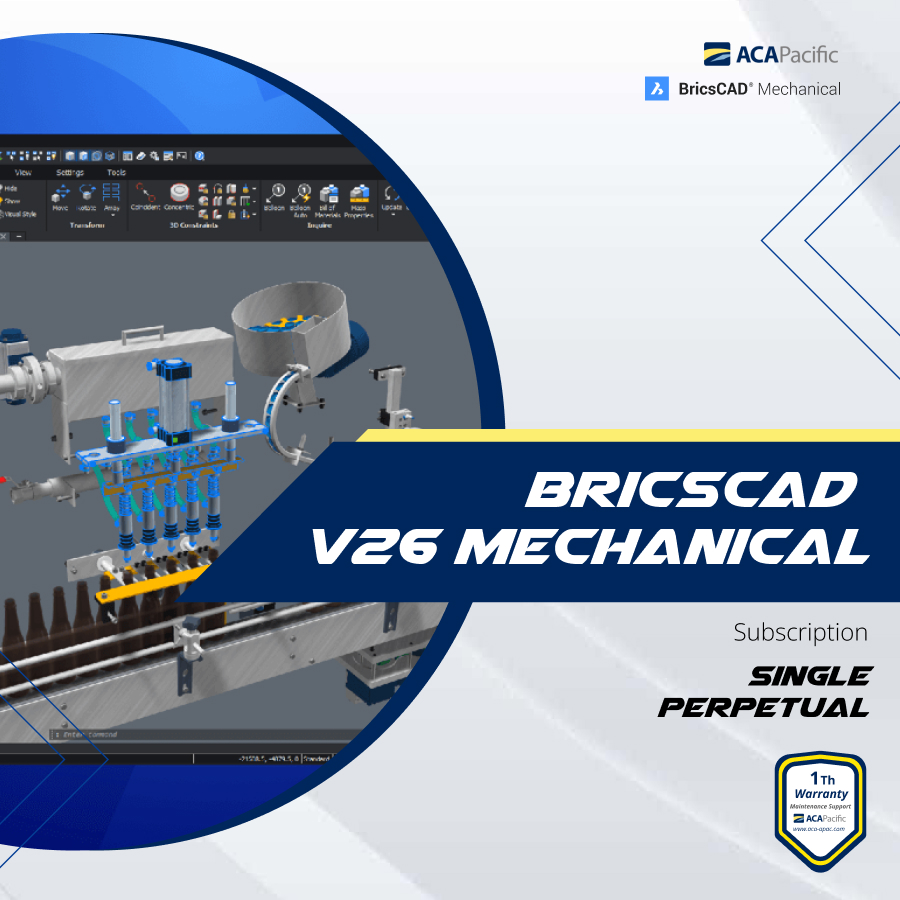
BricsCAD Mechanical is a DWG-based CAD platform that provides advanced 2D drafting and 3D modeling tools specifically for mechanical design and drafting, incorporating features for sheet metal design, parametric modeling, and automation to streamline workflows from concept to production. It allows users to leverage existing CAD data from various sources and maintain design intent with intelligent tools, while also enabling efficient generation of manufacturing documentation and visualizations.
Key Features
2D Drafting:
A familiar and fast 2D toolset for creating detailed mechanical drawings and annotations.
3D Modeling:
Tools for building accurate 3D models, managing assemblies, and visualizing concepts.
Parametric Modeling:
Capabilities to maintain design intent by recognizing relations and constraints, allowing for flexible design modifications.
Sheet Metal Tools:
Functionality to create sheet metal parts from scratch, convert solid parts to sheet metal with one click, and automatically unfold designs.
Design for Manufacturing and Assembly (DFMA):
Tools to optimize production processes, manage parts in assemblies, and facilitate the creation of manufacturing documentation.
Intelligent Automation:
AI-powered features and smart algorithms for automating repetitive tasks, such as intelligent explode views and parameter suggestions.
DWG-Based:
Built on the standard DWG format for seamless compatibility with existing CAD data and workflows.
Direct Modeling:
Freedom to edit 3D models using direct modeling techniques while maintaining the integrity of parametric features.
Simulation and Analysis:
Tools for detecting potential design flaws early through 2D Finite Element Analysis (FEA) and evaluating object interaction.
Documentation Generation:
Efficient creation of 2D instructions from 3D models for assembly and production, with tools for adding 3D annotations.